- Downspout into a buried pipe. Roof water goes underground instead of onto the lawn by the wall.
- Ground regraded away from the house. At least 6 in of fall over the first 10 ft where the lot allows.
- Catch basin at the low spot. A grated box that collects the water that used to pond there.
- Solid pipe running downhill. Carries the water away with a steady slope and no flat spots.
- Outlet. A pop-up emitter lower in the yard, a curb outlet (city permit), or a sump pump.
Get a free yard drainage estimate →
Why your backyard floods when it rains
- Clay absorbs slowly. Even moderate rain arrives faster than clay can take it in.
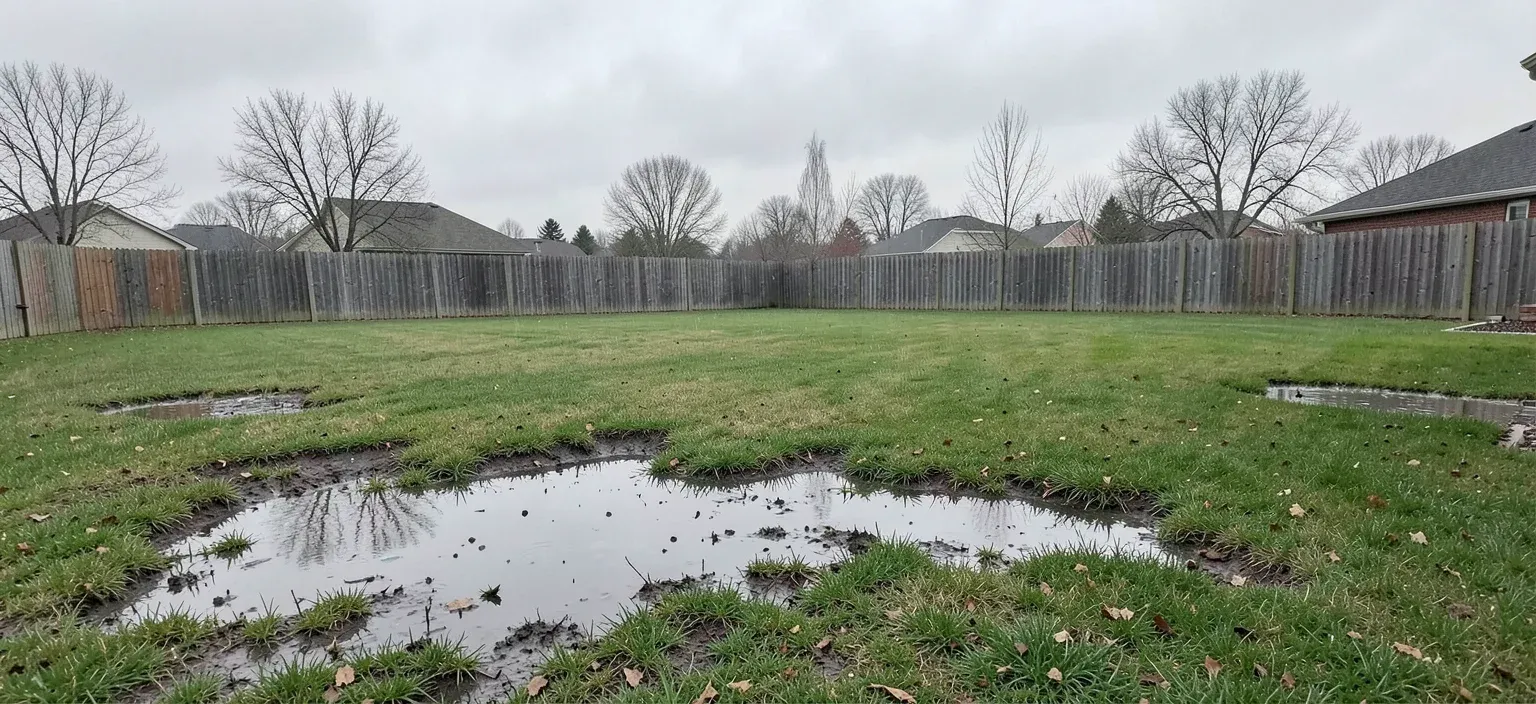
- Low spots. Settled soil, old tree stumps, and lawns that were never graded collect water.
- Hard surfaces. Patios, driveways and roofs send their water onto the lawn.
- Neighbors uphill. Water from higher lots crosses property lines.
- It’s not rain. If water shows up when it hasn’t rained, look for a broken sprinkler or water line first. That’s an irrigation or plumbing fix.
Standing water in yard solutions
| What you see | Likely fix |
|---|---|
| Puddles under downspouts | Downspout extensions or buried lines |
| One low spot that ponds | Catch basin piped away |
| Water sheeting off a patio or driveway | Channel drain |
| Whole lawn soggy for days | Regrading plus a French drain |
| Water with no downhill way out | Sump pump |
| Water when it hasn’t rained | Pipe or sprinkler leak (plumber) |
From cheapest to most involved:
1. Redirect roof water
Downspouts that empty onto the lawn can account for a large share of the water. Extend them or tie them into a drain line. Downspout fixes →
2. Regrading the yard for drainage
Reshape the ground so water flows toward a drain or the street instead of pooling. Next to the house, the California Residential Code calls for the ground to fall at least 6 inches over the first 10 feet. Regrading is often part of a bigger fix rather than the whole fix in clay.
3. Catch basins at low spots
A grated box set at the lowest point, piped underground to an outlet. Good when one spot collects water.
4. Channel drains for hard surfaces
A grated trench across a driveway, patio or garage entry catches sheet water before it reaches the lawn or the house.
5. French drains
For large soggy areas or water that moves underground. In clay, the drain has to carry water to an outlet. French drains in clay →
6. Sump pump
When the yard has no downhill outlet, water collects in a basin and gets pumped to the street or another legal outlet.
Dry well vs French drain in clay
A dry well is an underground pit that lets water soak into the soil. In sandy soil it works well. In clay, it fills up and stays full, because clay absorbs so slowly. If a contractor proposes a dry well in Sunnyvale, ask whether they’ve tested how fast your soil absorbs water (a percolation test). A French drain or catch basin that carries water away is usually the safer choice in clay.
Water getting under the house too? Crawl space water →
Common questions
Is a dry well or a French drain better in clay soil?
Usually a French drain or catch basin that carries water away. Dry wells rely on soil absorbing water, and clay absorbs slowly, so test how fast your soil drains before choosing one.
How long should water stand in a yard after rain?
On clay, a few hours after a heavy storm is normal. Water that’s still there after a day or two, or that kills grass, breeds mosquitoes, or reaches the house, is worth fixing.
How much does regrading a yard cost?
It varies widely with size, access and how much soil has to move. Small touch-ups next to the house can be modest. Full-yard regrading is a bigger job. A contractor will price it after seeing the slope.
Who do I call for yard flooding?
A drainage contractor or a landscape contractor who does drainage. Check their California license at cslb.ca.gov.
Is standing water in my yard my neighbor’s responsibility?
Sometimes water from an uphill lot is the source. Talk to your neighbor first. A contractor can show where the water is coming from.
Get a free estimate from a licensed yard drainage contractor →
Sunnyvale Drainage Help is a free referral service, not a contractor. Contractors pay us for referrals. How it works · Updated 2026-10-26